DeepSeek mHC
Slides for my DeepSeek mHC presentation, covering the key ideas and architecture choices along with where the approach fits in modern transformer pipelines.
Presentation (PDF): mHC.pdf
 💻
💻I’m an Architect at Majestic Labs, an AI hardware infrastructure startup, where I work on computer architecture and performance across the hardware and software stack. I analyze and validate accelerator hardware rooflines for real kernel workloads, identify performance bottlenecks, and work on hardware or software solutions to achieve roofline performance. I collaborate closely with the kernel and compiler teams to connect workload behavior, software implementation, and architectural decisions.
Ex-AMD, with experience in RTL design, performance modeling, and high-performance I/O and memory subsystems, including IOMMU datapaths, DMA/RDMA, PCIe, and interconnects.
I earned a BASc in Computer Engineering from UBC (2024). My broader technical interests center on accelerators, ML systems, attention/transformer workloads, and the hardware/software tradeoffs that drive real end-to-end throughput.
BASc Computer Engineering
University of British Columbia (2024)
I’m interested in performance-critical systems for modern ML—especially attention and sequence models—where algorithmic choices show up directly in memory traffic, kernel design, and end-to-end latency. I like working at the boundary between architecture and software: profiling bottlenecks, forming clear hypotheses about where time/data is going, and turning that into measurable speedups.
More broadly, I’m drawn to computer architecture (memory systems, interconnects, accelerators, HW/SW tradeoffs) and to the mathematical foundations that make good engineering decisions possible (probability/statistics, linear algebra, signal processing).
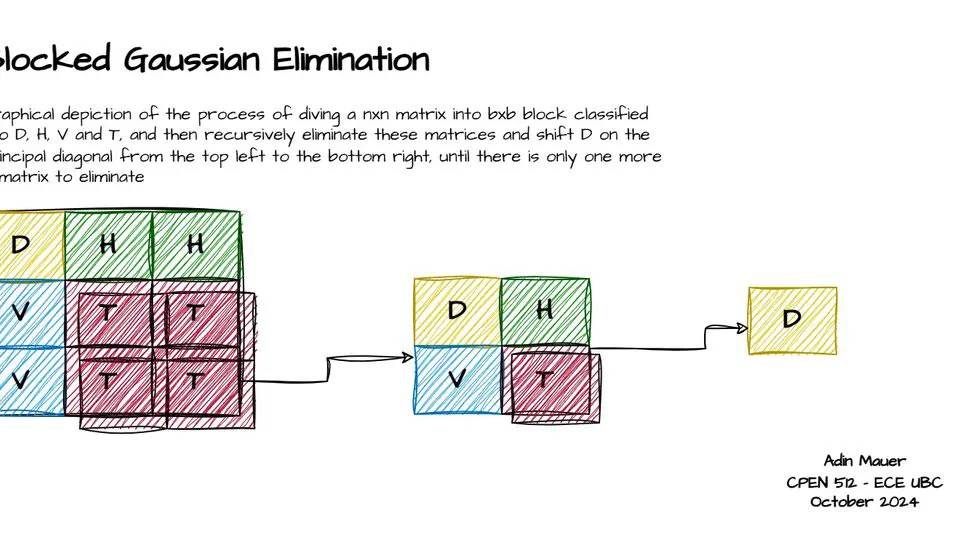
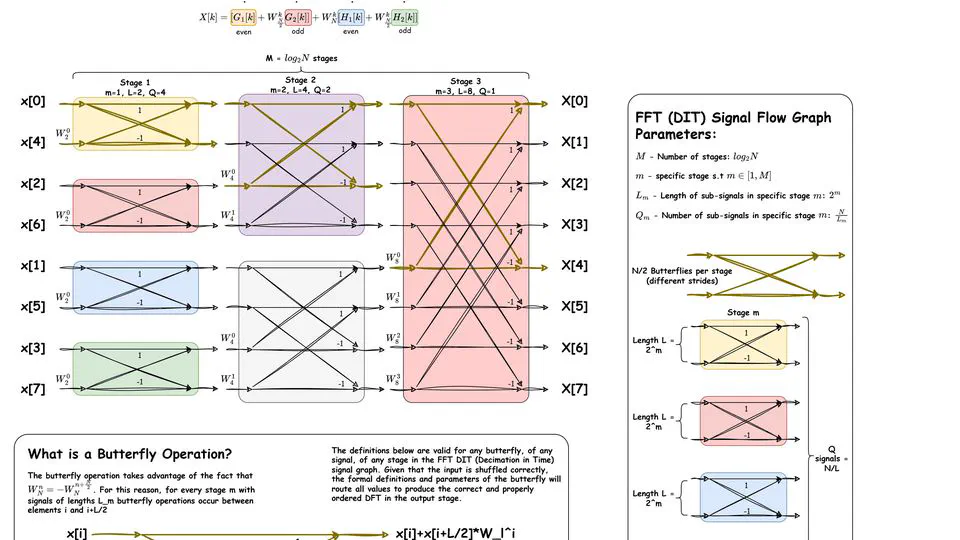
I keep the theory grounded through hands-on accelerated computing work. For example, in my final semester at UBC I took CPEN 512 (Parallel and Configurable Computer Architecture), where I implemented dense linear algebra kernels (matmul, LU decomposition) across multiple parallel programming models (OpenMPI, pthreads, CUDA, Bluespec, Vectorblox). For the final project, I implemented a Cooley–Tukey FFT using CUDA and OpenMPI.
Slides for my DeepSeek mHC presentation, covering the key ideas and architecture choices along with where the approach fits in modern transformer pipelines.
Presentation (PDF): mHC.pdf
FlashAttention is an IO-aware attention algorithm designed to reduce memory traffic and improve throughput by fusing attention operations and recomputing intermediates as needed. This post outlines the key ideas, practical implications for large-sequence workloads, and where the approach fits in modern transformer pipelines. I presented this paper to the UBC CPEN 511 class in February 2025. See the presentation below for the walkthrough, and download the source document for the full technical details.
Source document (PDF): Review_FlashAttention_AdinMauer.pdf